

今天我们来学习雅思口语Part 2中旅游自然类话题的答题技巧。这类题目在考试中非常常见,比如“想再去的旅行”、“外国的短期停留”、“自然之地”、“远行”、“想再去的旅行”等。很多同学遇到这类题目时,要么无话可说,要么说得杂乱无章。
其实,这类题目有一个万能答题框架,掌握后你就能从容应对。今天我们就以澳大利亚黄金海岸为例,用一套素材串讲这些题目,教大家如何构建一个7分+水平的回答。
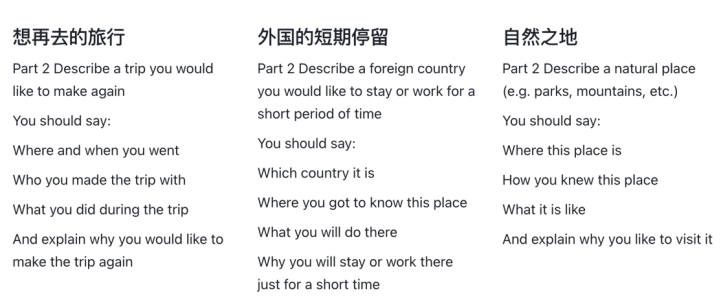
雅思口语旅游自然类题目的核心框架及示范
通过对于每个话题下小问题的要求,我们可以发现无论题目怎么变,旅游自然类话题都可以用以下三段式结构来组织:
【首段】背景介绍(回答5W1H)
When:什么时候去的?
Who:和谁一起?
Where:去了哪里?
Why:为什么去?
How:怎么知道这个地方的?
首段示范:
I'd like to talk about one of the most breathtaking natural places I've ever visited—the Gold Coast beaches in Australia. It's located in Queensland, about an hour's drive south of Brisbane, and is renowned for its long coastline and golden sandy beaches. I first visited a few years ago with my best friend during our summer break. I had seen photos online, but seeing it in the flesh was a whole different story.
一开篇就用“one of the most breathtaking natural places”直接扣住了“自然之地”这个题目关键词,让考官立刻知道你要讲什么。接着介绍地理位置时,没有简单说“in Australia”,而是补充了“about an hour's drive south of Brisbane”,这样一个小小的细节就让描述有了空间感,显得更真实具体。最后一句“I had seen photos online, but seeing it in the flesh was a whole different story”用了对比的手法,既自然地交代了怎么知道这个地方的,又强调了眼见为实的震撼感,比直接说“it was beautiful”有力得多。整个首段虽然不长,但when、who、where、why、how五个要素都涵盖了,信息完整又不啰嗦。
【主体段】景物+活动(核心得分部分)
景物描写:看到了什么?(颜色、声音、气味、触感/海水、沙滩、山丘)
活动描写:做了什么?(具体动作+感受)
人物互动:和谁一起做了什么?
主体段示范:
When I set foot on the beach, I was blown away. The sand was incredibly soft and seemed to stretch for miles. The ocean had beautiful shades of blue—crystal clear near the shore and darker further out. The waves glistened in the sunlight, and the water was so clear I could see tiny shells on the bottom. Behind the beach, there were lush green hills standing against the blue sky. The air carried a fresh, salty scent, and seabirds were soaring overhead. With the sound of the waves and the warm sun, I felt completely at ease. There was hardly anyone else around—it felt like I had the whole place to myself.
During the day, we kept things low-key. We strolled along the shoreline, snapped some photos, and soaked up the sun on the sand. Sometimes we dipped our toes in the water—just messing around in the waves. Later, we found a nice cafe with an ocean view and grabbed some drinks while taking in the scenery.
主体段分为景物描写和活动描写两层,层次非常清晰。在景物描写部分,“五感法”让画面活了起来——视觉上,有海水的“shades of blue”、波浪“glistened in the sunlight”、远处“lush green hills”;听觉上,有“the sound of the waves”;嗅觉上,有“fresh, salty scent”;触觉上,有“soft sand”和“warm sun”。空间顺序也同时体现出来了,从脚下的沙滩写到眼前的海水,再延伸到远处的山丘,让整个画面有层次感。最后用“it felt like I had the whole place to myself”收尾,既表达了当时的感受,又暗示了这个地方的宁静美好。
活动描写部分同样精彩,没有泛泛而谈“we did some activities”,而是用了一系列具体生动的动词:“strolled along the shoreline”、“snapped some photos”、“soaked up the sun”、“dipped our toes in”、“messing around in the waves”。这些动词都很简单,但组合在一起就把一个轻松悠闲的海滩日描绘得栩栩如生。最后“found a nice cafe with an ocean view and grabbed some drinks while taking in the scenery”这个过渡也很自然,既展示了更多的活动,又让讲述有了时间的推进感。整个主体段描述的都是很普通的海滩活动,但因为用词精准、细节丰富,听起来就特别有画面感。
【结尾】感情升华(为什么难忘)
这个地方给你带来了什么感受?
为什么想再去?
它对你有什么特殊意义?
结尾段示范:
I love this place because it helps me get away from it all. Standing there, looking at the vast ocean, I feel a deep sense of calm. It serves as a reminder of how beautiful the world is. The peace I find there lingers long after I leave. That's why I would really love to go back again someday—maybe next time, I'd stay even longer and explore more of the natural areas nearby.
结尾部分虽然不长,但起到了很好的升华作用。开头一句“I love this place because it helps me get away from it all”直接点明了这个地方对自己的意义——不仅是好看,更是能让人逃离日常压力的地方。接下来“Standing there, looking at the vast ocean, I feel a deep sense of calm”用了一个现在分词结构,让画面感很强,仿佛考官也能看到你站在海边眺望的样子。
本文作者

雅思备考资料免费领取
大家扫描下方二维码添加小马甲即可免费获得更多雅思相关资料~